Sterling Silver
Crafted from solid silver, offering premium quality, lasting durability, and heirloom appeal.
Shop Sterling Silver
Someone hands you a small, heavy cup wrapped in tissue paper. It’s cool to the touch, a little dull with age, and it has a baby’s name engraved along the side. Maybe it’s a gift for your own newborn. Maybe you’ve inherited one from your grandmother, and you’re wondering if it’s actually fit to hand to your own child one day.
And then the question hits. Is this thing actually safe?
It’s a fair question, and one we hear often, usually from a parent who’s about to buy a sterling silver baby cup as a christening or baby shower gift and wants reassurance that they’re not handing over something that looks lovely but hides a problem. Here’s the short answer. Genuine sterling silver is one of the safest materials you can put in a baby’s hands. The real risks come from somewhere else entirely, and once you know what to look for, they’re easy to avoid.
Not all silver is created equal, and the labels matter more than most people realize.
Sterling silver is 92.5% pure silver, alloyed with about 7.5% other metal, usually copper, for strength. In the US, that ratio isn’t just a nice tradition, it’s a legal standard. Under the FTC’s Guides for the Jewelry, Precious Metals, and Pewter Industries, a piece can only be marked “sterling,” “silver,” or “925” if it meets that 92.5% threshold, and federal law also requires a maker’s name or registered trademark stamped alongside the purity mark. That’s why a stamped .925 baby cup is a fundamentally different object from an unmarked one you might find at a flea market or an unfamiliar online shop.
Silver plated items are a thin layer of real silver, sometimes just microns thick, bonded to a base metal underneath. Our silver plated baby cups use a non tarnish plating process that holds up beautifully, but they’re a different product from solid sterling. Lower price, thinner silver layer, still a genuinely nice gift, just don’t expect it to wear the same way over sixty years.
Pewter is a different material altogether. Old pewter did contain lead, which is exactly the association that makes some parents nervous about giving a pewter piece to a baby. Modern pewter, including the Salisbury pewter baby cups we carry, is a tin based alloy manufactured to be lead free. One important distinction worth knowing: unlike precious metals such as sterling silver, pewter and other base metal alloys are not automatically presumed lead safe under federal rules. The CPSC has specifically noted that alloys like pewter, copper, and aluminum can vary in lead content, so pewter items sold for children still have to pass third party lead testing and carry a compliance certificate, the same as any other children’s product. A reputable pewter maker builds that testing into the process, which is exactly what you should confirm before buying.
Three materials, three price points, one thing in common. None of them are the safety hazard people assume, as long as you’re buying from a source that can back up what the label says.
|
Sterling Silver |
Silver Plated |
Pewter |
|
|
Composition |
92.5% pure silver |
Thin silver layer over base metal |
Tin based alloy |
|
Lead status |
Precious metal, presumed lead safe by CPSC |
Safe when properly manufactured and plated |
Must be manufactured lead free and tested |
|
Tarnish resistance |
Tarnishes, fully restorable |
Tarnishes, non tarnish coatings available |
Doesn’t tarnish the same way |
|
Best for |
Heirloom keepsakes, engraving that lasts generations |
Budget friendly gifting, classic look |
Vintage style pieces, gift sets |
|
Typical price range |
Higher |
Mid range |
Most accessible |
If you want a side by side breakdown before you shop, our Which Silver Is Right for You guide walks through the same comparison with photos of each finish.
No, and this isn’t a hedge. It’s about as settled as materials science gets.
Silver is chemically inert. It doesn’t react with skin, it doesn’t leach into food or milk under normal use, and it’s one of the least allergenic metals available. Compare that to nickel, which is the single most common cause of metal contact allergy in both children and adults, responsible for itchy rashes and redness wherever it touches skin. A properly made sterling silver cup won’t do that to your baby.
You may also see silver’s reputation as a natural antiseptic mentioned in baby gift marketing, including some of our own product pages. That reputation is old, and silver’s mild antimicrobial properties have been documented for a long time, but it’s worth being straightforward about this. It’s not a clinical claim, and a silver cup isn’t a medical device. Think of it as a nice historical footnote, not a reason to skip washing the cup after use.
Here’s the part that matters more than the silver itself. Lead and nickel are the real hazards, and they show up in cheap or uncertified products, not in genuine sterling silver.
US regulation actually does a lot of the heavy lifting for you here. The Consumer Product Safety Improvement Act (CPSIA) caps lead content in children’s products at 100 parts per million for any accessible part. When the CPSC evaluated which materials reliably fall under that limit, precious metals, sterling silver among them, made the list of materials the Commission has determined don’t need third party lead testing, because they’re already understood not to exceed it. Gems, natural pearls, and certain textiles sit on that same list. Genuine sterling silver is, structurally, not a lead risk.
Pewter sits in a different spot on that list. Because pewter, copper, and aluminum alloys can vary in composition, the CPSC has specifically kept those materials subject to third party testing and certification rather than exempting them outright. That’s not a reason to avoid pewter, it just means the testing and paperwork actually matter for that material in a way they don’t for sterling silver.
Where things go sideways is with unmarked, uncertified pieces, a bargain “silver” cup from an unfamiliar overseas seller, something picked up secondhand with no hallmark, or a plated item where corners were cut during manufacturing. That’s where lead solder or unregulated base metals can slip through. It isn’t the silver you should be wary of. It’s the paperwork behind it.
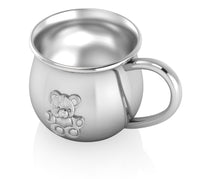
This is also why we make a point of it. Every Krysaliis piece we carry, including the Sterling Silver Baby Cup and Spoon Set in the Teddy Embossed design, ships with a Certificate of Authenticity and is manufactured to meet CPSC safety standards. That paperwork is the whole point. It’s what turns “trust me” into something you can actually verify.
Tarnish alarms people because it looks like corrosion. It isn’t.
Tarnish is silver sulfide, a surface reaction between silver and trace sulfur compounds in the air. It’s cosmetic. It doesn’t weaken the metal, and it isn’t toxic if a baby’s hands or mouth happen to touch it. What actually matters is what you use to remove it. Harsh commercial silver dips and ammonia based polishes aren’t something you want anywhere near a cup a baby might put in their mouth. A soft cloth and a mild, baby safe silver polish will do the job without leaving chemical residue behind. Skip the abrasive pastes entirely.
Mostly, no, and that surprises a lot of people.
The overwhelming majority of silver baby cups, including the ones in our baby cups collection, are keepsakes first. Something engraved with a birth date, displayed on a shelf, handed down at a christening or first birthday, occasionally used for a sip of milk under supervision rather than run through the dishwasher every morning. A mini cup sized at around two inches, scaled for a baby’s small hands, is a good example of a piece built to be treasured more than it’s built for daily feeding duty.
That distinction matters for safety too. If you do plan to let a baby actually drink from one, skip anything with delicate handles, small attached elements, or fussy decorative work a baby could work loose. Keep use supervised. And treat the engraving the way you’d treat a christening gown. Beautiful, meaningful, not meant to survive daily wear and tear from a toddler.
If you want a simple checklist, here it is.
None of this takes more than a couple of minutes at checkout. Reputable sellers list the hallmark, the material, and the certification right on the product page. If that information is missing or vague, that tells you what you need to know about buying from them.
The care routine is genuinely simple, which is part of why these cups become heirlooms instead of clutter.
Wipe it down with a soft cloth after use. Wash by hand with mild soap and warm water, and skip the dishwasher, which is harder on silver than most people expect. When tarnish shows up, a gentle silver polish and a soft cloth handle it in a couple of minutes, and our Silver Cleaning Kit is built for exactly this kind of light, regular care. Store the cup somewhere dry, ideally in the original gift box or a soft pouch, away from rubber bands and latex, both of which speed up tarnishing on contact.
For a fuller rundown, including how to care for high micron sterling layer pieces, our Silver Care Guide covers all three finishes in one place.
Do that, and a cup bought for a christening today is still readable, engraving intact and shine restorable, at a grandchild’s baby shower thirty years from now.
1. Is sterling silver safe for a baby’s skin?
Yes. Silver is chemically inert and one of the least allergenic metals available, unlike nickel, which is a common cause of skin reactions.
2. Can a baby put a silver cup in their mouth?
Genuine sterling silver poses no toxicity risk from mouth contact. The bigger consideration is design, so avoid small attached parts and keep use supervised.
3. Are silver plated baby cups safe?
Yes, provided the plating comes from a reputable manufacturer using a proper electroplating process rather than a cut rate coating over an unknown base metal.
4. Is tarnish on a baby cup dangerous?
No. Tarnish is a harmless surface reaction (silver sulfide). Use a mild, baby safe polish rather than harsh chemical dips to remove it.
5. Is pewter safe for babies today?
Yes, when it comes from a reputable manufacturer. Modern pewter sold in the US is made lead free, and unlike sterling silver, it’s required to pass third party lead testing and certification before it can be sold as a children’s product, so buying from a certified brand matters.
6. What age can a baby use a silver cup?
Most families treat these as keepsakes from birth, moving to occasional supervised use once a baby can hold a cup steadily, typically around 12 months.
7. How do I know a silver baby cup is genuinely safe?
Check for a .925 or Sterling hallmark with a maker’s mark, and buy from a retailer who can confirm CPSC compliance and provide a Certificate of Authenticity.
A well made sterling silver baby cup isn’t a risk you’re taking on for the sake of tradition. It’s one of the safer, more thoroughly regulated gifts you can give, provided you buy the real thing from someone who can prove it. Check the hallmark, ask about certification, and the rest takes care of itself.
If you’re shopping for an upcoming christening, baby shower, or first birthday, browse our sterling silver baby cup collection, look through matching pieces in our christening gifts and baby keepsake collections, or pair a cup with a spoon in one of our silver baby gift sets for a complete keepsake gift. Every piece we sell is ready to be engraved, gift boxed, and passed down for generations to come.